Let The River Flow: An Eco-Indigenous Uprising and Its Legacy in Art, Ecology and Politics
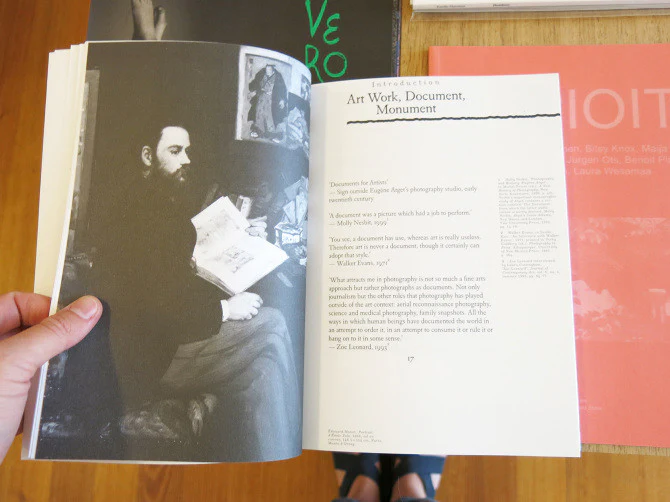
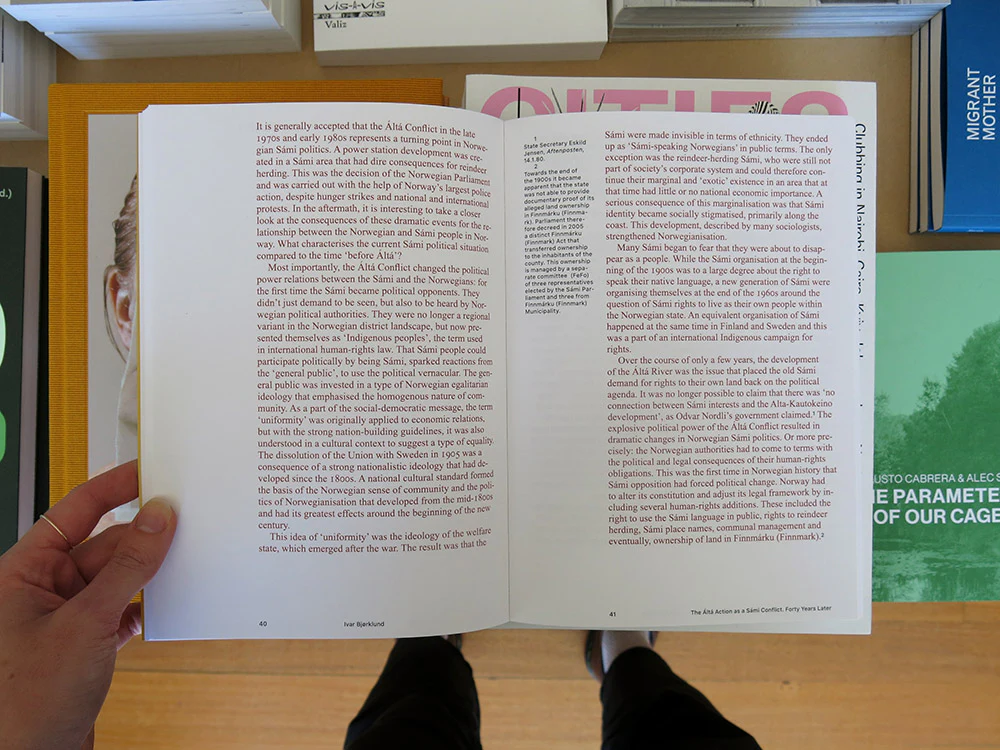
Let the River Flow takes the eco-indigenous action against the construction of a hydroelectric power plant in the Altaelva river in Northern Norway during the late 1970s and early ’80s as its starting point. The series of massive protests led by the Sámi people grew into an unexpectedly broad movement of solidarity across society, in which artists played a pivotal role. This book reflects on events at the time and their correlations with artists’ eco-actions worldwide today. It addresses the political, cultural, and artistic aspects, including political organising, new influences of indigenous thinking on contemporary politics, and the centrality of artists within these activities.
240 pages, 23.5 x 16.5 cm, paperback, Valiz (Amsterdam).
Product Information
Product Information
Shipping & Returns
Shipping & Returns




Let The River Flow: An Eco-Indigenous Uprising and Its Legacy in Art, Ecology and Politics
Let The River Flow: An Eco-Indigenous Uprising and Its Legacy in Art, Ecology and Politics
Let the River Flow takes the eco-indigenous action against the construction of a hydroelectric power plant in the Altaelva river in Northern Norway during the late 1970s and early ’80s as its starting point. The series of massive protests led by the Sámi people grew into an unexpectedly broad movement of solidarity across society, in which artists played a pivotal role. This book reflects on events at the time and their correlations with artists’ eco-actions worldwide today. It addresses the political, cultural, and artistic aspects, including political organising, new influences of indigenous thinking on contemporary politics, and the centrality of artists within these activities.
240 pages, 23.5 x 16.5 cm, paperback, Valiz (Amsterdam).
Product Information
Product Information
Shipping & Returns
Shipping & Returns
Description
Let the River Flow takes the eco-indigenous action against the construction of a hydroelectric power plant in the Altaelva river in Northern Norway during the late 1970s and early ’80s as its starting point. The series of massive protests led by the Sámi people grew into an unexpectedly broad movement of solidarity across society, in which artists played a pivotal role. This book reflects on events at the time and their correlations with artists’ eco-actions worldwide today. It addresses the political, cultural, and artistic aspects, including political organising, new influences of indigenous thinking on contemporary politics, and the centrality of artists within these activities.
240 pages, 23.5 x 16.5 cm, paperback, Valiz (Amsterdam).